SEO-Ready Website Design
SEO website structure: built into your site from day one
SEO website structure built into your site from day one: architecture, internal linking, speed and structured data, so search engines and AI assistants understand every page.
Most websites fail at SEO before they publish a word, because the foundation was never built. Ours start with it.

On this page
01What is SEO website structure?02An honest word first: structure enables…03What an SEO-ready website structure includes04SEO vs AEO vs GEO, what is the difference?05Signs your current website structure is holding…06How we build SEO structure into every Floux…07Frequently asked questions
What is SEO website structure?
SEO website structure covers everything that helps search engines and AI answer engines make sense of your site. Think of it like a building: content is the furniture, but structure is the walls, doors, and floor plan. No amount of great furniture fixes a building people cannot walk through.
- Architecture. Which pages exist and how they are organized and linked
- On-page structure. Titles, headings, URLs, and internal links on each page
- Technical foundations. Speed, mobile, indexing, and schema markup
- Content structure. How each page's content is written and formatted for humans and machines
An honest word first: structure enables rankings, it does not guarantee them
Here is what most agencies will not tell you: no website structure, no matter how good, can guarantee Google rankings or AI citations. Rankings also depend on your competition, your content, your reputation, and time.
What structure does is remove every technical barrier between your business and visibility. It makes your site eligible to compete, fast, crawlable, understandable, and answer-ready. Without it, even excellent content struggles. With it, everything else you invest in SEO works harder.
We would rather earn your trust with honesty than your signature with promises.
Signs your current website structure is holding you back
If several of these sound familiar, the fix is usually structural, and the best time to fix structure is during a build or redesign, not after. That is exactly what our website redesign service for small businesses is for.
- Your site does not appear on Google even for your own business name plus your service
- All your services are crammed onto one page
- Several pages target the same topic and none of them ranks
- Your site takes more than a few seconds to load on a phone
- Page titles are missing, duplicated, or say things like "Home"
- You have no blog or content structure. And no plan for one
- Your site was built by a page-builder template with no sitemap logic at all
How we build SEO structure into every Floux website
After launch, SEO becomes a marathon of content and authority, and our blog is where we share exactly how that works, in plain language.
01
of 05 steps
01
Keyword & intent research
What your customers search, in Arabic and English where relevant.
02
Sitemap & keyword map
Every page planned, every page with one job.
03
Content structure
Answer-first sections, clear headings, internal links planned before writing.
04
Technical build
Speed, mobile, indexing, and schema configured from day one.
05
Launch & measure
Submitted to Google, connected to Search Console, ready to grow.
FAQ
Frequently asked questions
Does website structure really affect SEO?
Yes, significantly. Search engines rank pages they can crawl, understand, and match to a searcher’s intent. A clear structure — logical page hierarchy, one topic per page, clean URLs, proper headings, internal links, fast load times, and schema markup — removes the technical barriers that keep otherwise good content invisible. Structure alone does not guarantee rankings, but poor structure can quietly prevent them no matter how good your content is.
Can you guarantee my website will rank on Google?
No — and you should be cautious of anyone who does. Rankings depend on competition, content quality, authority, and time; no agency controls Google’s algorithm. What we can commit to is what we control: a website with correct technical foundations, a keyword-mapped structure, fast performance, and content formatted for search and AI engines. That gives your business a legitimate foundation to compete on, instead of invisible technical debt.
What is the difference between SEO, AEO, and GEO?
SEO is optimizing to rank in classic search results. AEO (Answer Engine Optimization) is formatting content to be the direct answer — featured snippets, People Also Ask, voice responses — using question headings and answer-first paragraphs. GEO (Generative Engine Optimization) is making your content citable by AI assistants like ChatGPT, Perplexity, and Google AI Overviews, through clear entities, consistent facts, and quotable expertise. One well-structured website can serve all three — which is how Floux builds.
What are Core Web Vitals and do they matter for a small business site?
Core Web Vitals are Google’s real-user experience measurements: how fast your main content loads (LCP), how quickly the page responds when someone taps or clicks (INP), and how stable the layout is while loading (CLS). They matter for small businesses in two ways: they are a lightweight ranking factor, and — more importantly — they measure the experience that decides whether visitors stay or leave. A fast, stable site supports both rankings and conversions.
My current website has poor structure. Do I need a full rebuild?
Not always. Some issues — page titles, headings, internal links, speed, schema — can often be fixed on an existing site. But if services are crammed together, pages compete for the same topic, or the underlying build is bloated, a redesign is usually the more cost-effective fix because structure is cheapest to correct during a build. We assess your current site honestly and recommend the smaller fix whenever it will genuinely work.
How do I get my website cited by AI search engines like ChatGPT or Google AI Overviews?
There is no guaranteed formula — AI engines choose their own sources — but the practices that help are clear: strong classic SEO (most AI citations come from pages that already rank well), answer-first content with clear question headings, consistent facts about your business across the web, genuine expertise and original information, and clean machine-readable formatting like lists and tables. We build all of this into your content structure from day one, so you are eligible to be cited as AI search grows.
Is SEO website structure included in every Floux website?
Yes. SEO website structure is part of every build: page hierarchy, titles and metadata, internal links, speed optimisation and structured data, before launch and at no extra cost.
Do you offer seo website structure in Egypt, the Gulf and Europe?
Yes. Most of our clients are in Egypt, the UAE and Saudi Arabia, and we work remotely with businesses across Europe and Canada. SEO website structure in Egypt and seo website structure in Europe follow the same process, the same quality bar and the same fixed price; only the time zone of our calls changes. Every project is planned in Arabic and English, and you follow progress on a live staging link.
How does a seo website structure project with Floux start?
First we audit what you already have, from your website and content to your competitors, so the seo website structure plan fixes real problems. You receive the audit summary, a timeline and a fixed price together, with no obligation to continue. Our approach follows Google Search Central guidance.
Case studies
See it in real projects.
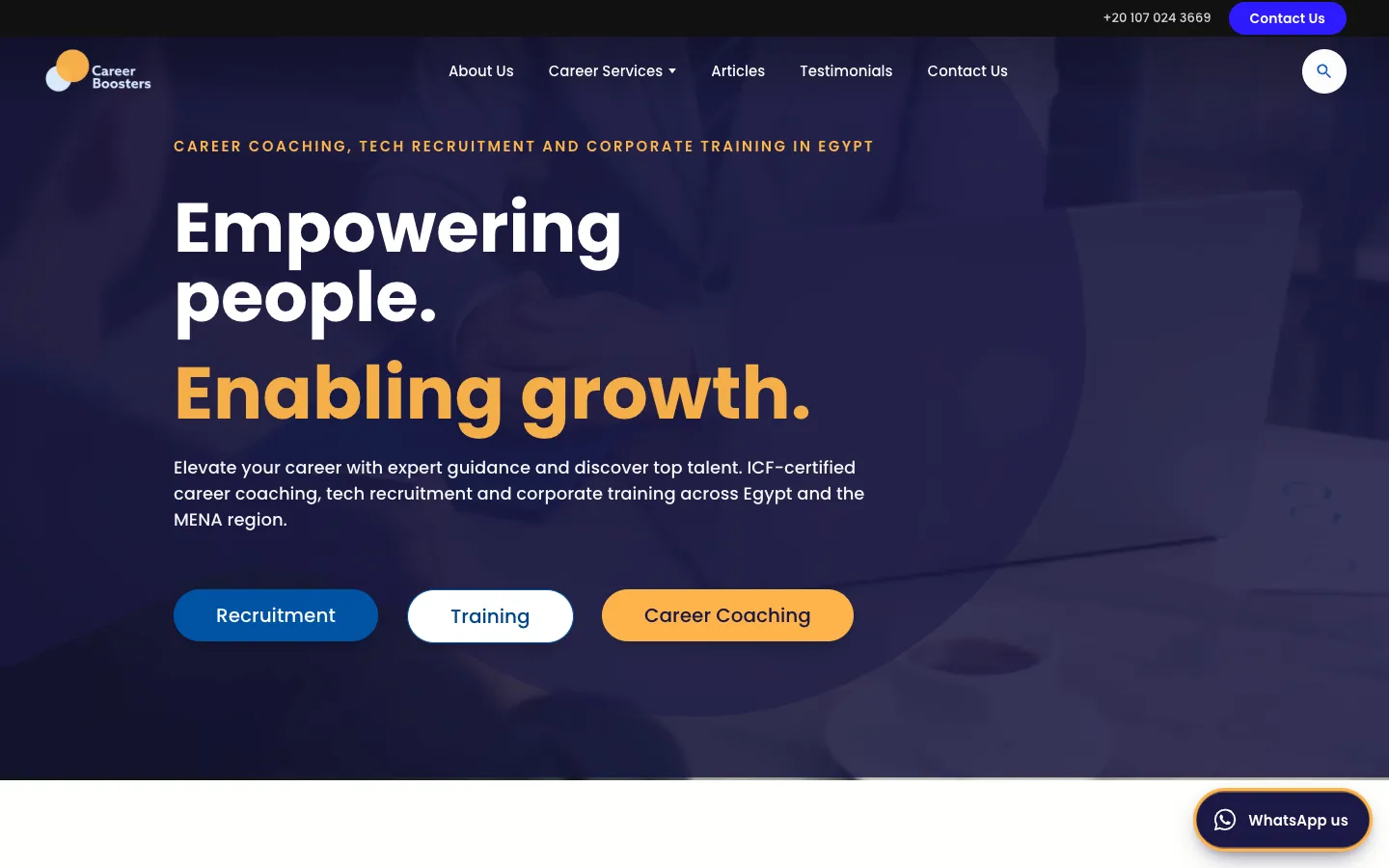
Complete website with SEO built in, live in 8 days: coaching, recruitment and training.
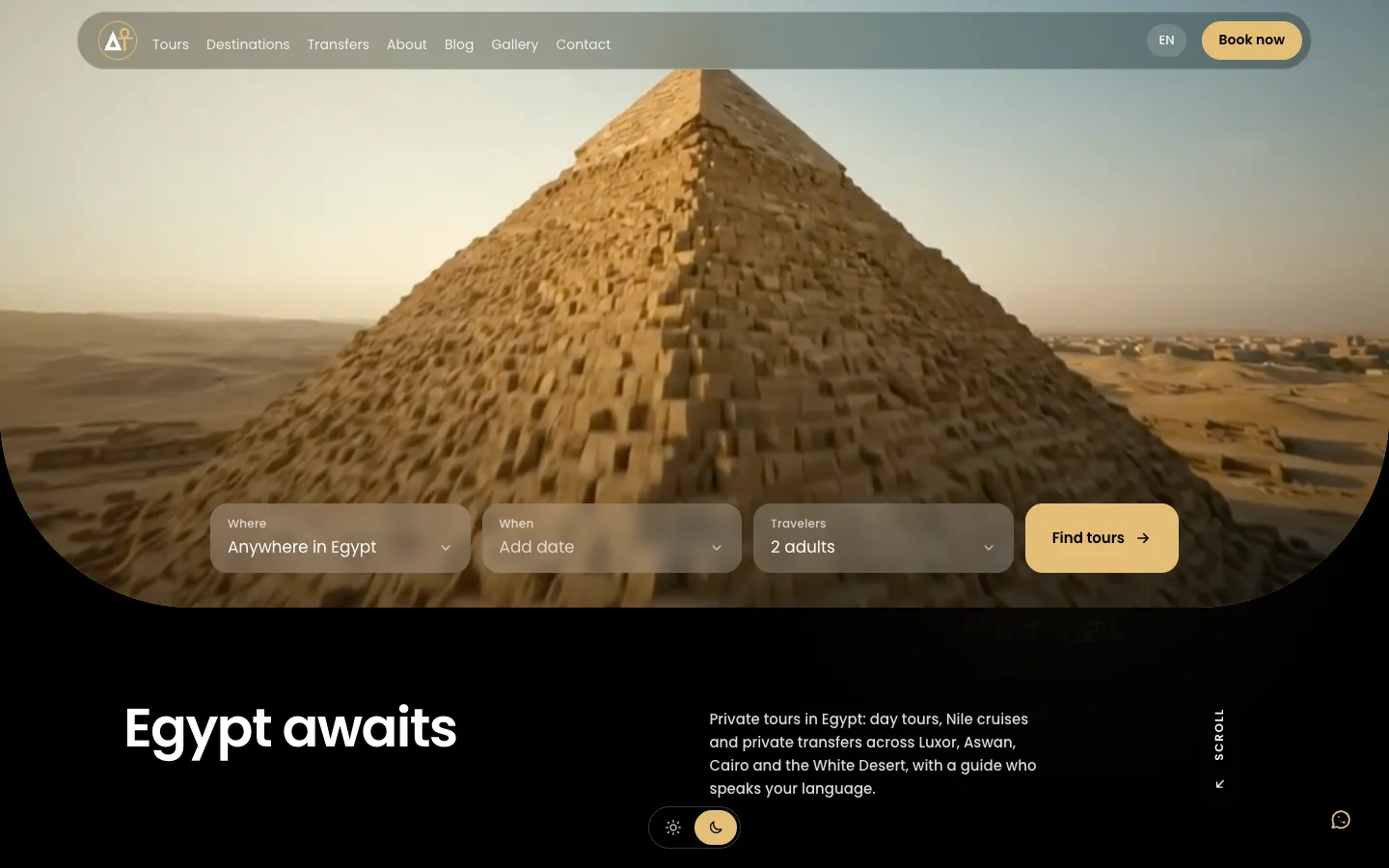
Hacked site rebuilt in 60 days: 6 languages, tour search, filters, route maps and full SEO.
Start a project
Want a website search engines actually understand?
Tell us about your business. We will plan a website with the structure to compete in search, honestly scoped, fixed-price, and built to grow with you. Based in Egypt, working with clients across the Gulf, Europe and Canada, in Arabic and English.
Websites that flow. Designed in Arabic and English, built on WordPress and WooCommerce, owned by you.